I am very hesitant to write here often for many reasons. First, I question my own sanity as I often have conflicting thoughts and feelings. I have to think very carefully about what I really want to say.
I may be social in my everyday life, but on a deeper level I'm very reserved and hesitant to share anything personal at all... I think a lot of this is because I really don't want to deal with the emotional triggers associated with my deepest thoughts. It's anxiety-inducing talking about what's causing me anxiety!
Most of the time, I just don't have a ton to say. I only want to open my mouth if it benefits the world somehow. My documentary is probably my most extensive message, and it will take me many years to get that many organized words out again in any form, whether that be my fantasy novel or future films.
Deep down, I am always dealing with some kind of pain, but I'm so used to it by now and well-practiced in effective coping that I see no point in sharing everything. I sometimes feel old for thinking this way, since you sorta have to accept a lot of things you don't like as you get older.
But hey, I'm also blessed... I have a good life, great friends and family, a fiancé, and a bright future. Sure, I'll always have mental health problems, and while I can chip away at some of them, others may remain unresolved. That's okay. (It's taken me many years to be able to say that and truly believe it.)
If the closest I get to sharing some of my deeper mental health issues is to talk about them vaguely, I don't mind as long as it accomplishes something. Even if it's not particularly interesting to you guys as my readers, it's fine with me because I already feel better writing this.
Thursday, July 20, 2017

Tuesday, July 11, 2017
DVD Discount to Celebrate 3,000 Subscribers!
I now have 3,000 subscribers on YouTube! I am super lucky to have you guys watching my videos and giving feedback. I'm also happy to see that my Asperger's documentary has spread so much awareness and helped promote acceptance of our species!
To celebrate, I applied a discount to my DVD copies of "Through Our Eyes: Living with Asperger's." This offer is only valid until August 9th, so if you don't already have a copy or want to pick up one for a friend, now is a great time!

Thank you all for your support! I love making videos on Asperger's and Autism and I hope to continue it for a while.
Thursday, June 15, 2017
My Social Limitations.

I like pretty much everyone, and find it easy to get along with diverse types of people. While solitude is my preference, I am also energized by certain people and activities. I'm up for all sorts of adventures as long as it's within my abilities, has an important purpose for me and fits into my schedule.
That being said, I might seem UNadventurous in many cases due to my limitations associated with Asperger's and introversion. Both severely limit how much adventure I can take in, regardless of my desire and determination to do it.
Let me give you an idea of my social capacity.
Every friend hangout, depending on the "difficulty level" can render me "disabled" for a day. It usually takes me 1-3 days to be restored to optimal functioning where I can keep up with most "typical" people. It doesn't matter how much I enjoyed it, or my "willpower" to recover. I also cannot "build up stamina" because my brain and body don't work like that. I have managed to increase my stamina/capacity with supplements, diet, sleep, and exercise, but even with that, overdoing it comes at a price. I still cannot push beyond my limits without crashing later.

The "difficulty level" of a social hangout is increased by things like:
- Change of plans
- New locations
- New people
- Sensory level of places / people (how loud, bright, etc.)
- Information level of places / people (how much will be stuffed in my brain?)
- Presence of anxiety triggers
- Etc.
In this post, I am also taking into account other life stuff that uses my energy:
- Being out in public, around people, noise, light, etc.
- Shopping, errands, driving
- Unpredictable events at home (family walking about/talking, guests, phone calls)
- Work tasks, writing, research, filming, coordinating
- Cooking, cleaning, watering plants, etc.
- Managing my mental/physical health (exercise, meds, making herbal mixes, counseling, redirecting my scattered brain constantly, worrying about people, problem-solving)
How often I socialize really depends on the nature of the event, but it also depends on who I'm socializing with.
If I see a friend once a month or more, they are likely in my top 4 and I consider them a close friend. (#3-4 can rotate, but my top 1-2 stay the same.) I am not the typical person who hangs out with friends everyday at work and then again on the weekend. One friend per week (rotating friends so no one is left out) is quite enough for me. The only exceptions are for work and brief "stopping by" or "dropping things off" visits.
I also live with my family, which uses up a good bit of my energy as is.
If I see a friend more than once a year, it means they are probably in my top 20 and I value my relationship with them. No, I really do—that huge time gap for me is actually very small and I will feel like I just saw them yesterday.
For people who want to meet me, I am content to see them just once in my life.
I have a vivid memory, so I don't need many social hangouts to feel satisfied with relationships. In fact, too many can overload me and I'll end up resenting hangouts with the people draining my capacity. Of course, they'd never know because I can't be anything but polite to them.
WHAT ABOUT ONLINE FRIENDS?

But I can't reply consistently, and I can't be everyone's best friend, so patience is pre-requisite for those who want to chat online with me.
I am happy to offer advice and encouragement, but I'm not an expert and cannot help resolve every problem that is presented to me (as much as I would like to). And I am so grateful to those giving me positive feedback and encouragement and would like to express that when I finally respond to them!
 |
| This is my email inbox. I promise I will answer you all, it will just take a while. T-T |
It's not natural for anyone to have 100+ best friends; I'm sure you understand. I do really want the best for you guys, but I also want to be sane. :)
Friday, June 2, 2017
My Brain Exploded. | Delayed Overload
It's days like this that remind me of my limitations.
I've been doing really well lately, feeling like I can take on the world. That feeling flew far out of existence this morning when my overwhelm hit me like a ton of bricks.

And for no reason.
I take excellent care of my physical and mental health, so logically there shouldn't be any reason for this to happen if I was like most people. But I'm not like most people. I have Asperger's.
I know my ASD makes my brain neurodivergent and unique, and has helped shape who I am. So I don't hate me, I just hate the bad side of ASD! (And OCD, I have both)
My theory is that my recent bouts of exhaustion are due to "delayed overload." Since my lifestyle habits and supplements help increase my mental capacity, I can take in a lot more information than normal! I can do a lot more, too.
But every once in a while, that pile of sensory data and information explodes in my brain.
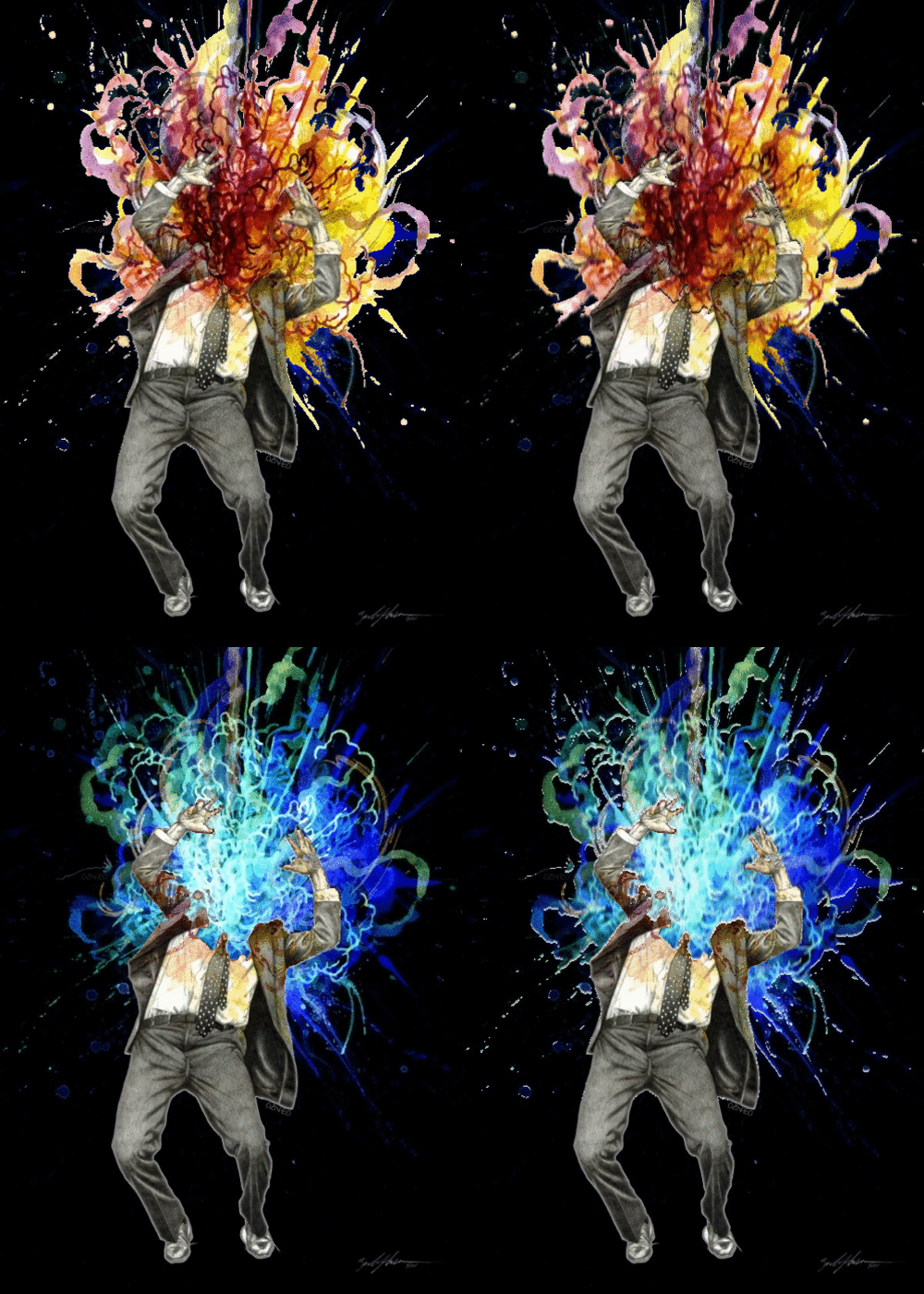
I go back to feeling like a failure as my body and mind feel sick. I suddenly can't control my thoughts, and I'm afraid of doing anything lest I add more fuel (information) to the flames (my broken brain).
I already feel bad about my social failures as is: like not hanging out often enough, or not being able to reply to all my emails and messages. I know part of it is that I know too many people, and part of it is my scattered attention...
I feel like no matter what I've done in life, I'm still a ditzy amateur and not meeting expectations.
The best I can do in these situations is wait it out, by myself. (Lest I vomit my insecurities on other people). I allow myself feel the pain, and let it pass. It helps to see it as a natural part of my system restoration process. Like running updated software on a system with outdated hardware, I sometimes gotta take a day to fix my system so I can continue to function at everyone else's level.
Sorry, everyone. I'll feel like myself again soon.
I've been doing really well lately, feeling like I can take on the world. That feeling flew far out of existence this morning when my overwhelm hit me like a ton of bricks.

And for no reason.
I take excellent care of my physical and mental health, so logically there shouldn't be any reason for this to happen if I was like most people. But I'm not like most people. I have Asperger's.
I know my ASD makes my brain neurodivergent and unique, and has helped shape who I am. So I don't hate me, I just hate the bad side of ASD! (And OCD, I have both)
My theory is that my recent bouts of exhaustion are due to "delayed overload." Since my lifestyle habits and supplements help increase my mental capacity, I can take in a lot more information than normal! I can do a lot more, too.
But every once in a while, that pile of sensory data and information explodes in my brain.
I go back to feeling like a failure as my body and mind feel sick. I suddenly can't control my thoughts, and I'm afraid of doing anything lest I add more fuel (information) to the flames (my broken brain).
I already feel bad about my social failures as is: like not hanging out often enough, or not being able to reply to all my emails and messages. I know part of it is that I know too many people, and part of it is my scattered attention...
I feel like no matter what I've done in life, I'm still a ditzy amateur and not meeting expectations.
The best I can do in these situations is wait it out, by myself. (Lest I vomit my insecurities on other people). I allow myself feel the pain, and let it pass. It helps to see it as a natural part of my system restoration process. Like running updated software on a system with outdated hardware, I sometimes gotta take a day to fix my system so I can continue to function at everyone else's level.
Sorry, everyone. I'll feel like myself again soon.
Sunday, May 7, 2017
Autism Spectrum Disorder (ASD) Diagnosis: A Basic Guide
One question I get a lot is how to seek diagnosis for Autism Spectrum Disorder (ASD) (also Asperger's Syndrome, though that diagnosis was replaced by ASD in the DSM-V). The process is different for everyone and depends on which route you take, but here is a basic guide I put together to help you get started!
~~~~~~~~~~~~~~~~~~~~~~~~~~~~~~~~~~~~~~~~~~~~~~~~~~~~~~~~~~~~~~~~~~~~~
Who Can Diagnose Autism Spectrum Disorder (ASD)?
- Psychologists or Psychiatrists (doctors who know about the human mind)
- Neurologists (doctors who work on the brain, spine, and nerves)
- Developmental Pediatricians (doctors who have special training in child development and children with special needs: also can diagnose teens)
Any psychologist, psychiatrist, neurologist, or developmental pediatrician can diagnose Autism Spectrum Disorder. However, it is recommended that you seek someone who specializes in autism, or at least one who has experience in diagnosing ASD. (For example, Dr. Wahlberg of the Prairie Clinic in Geneva, IL)

Which type of professional you should choose for diagnosis depends on your situation. For instance, in diagnosing a child, seek out professionals with much experience with children (i.e. a developmental pediatrician—though a child neurologist or psychologist may be just as good). Teens may also be diagnosed by pediatricians since they usually treat patients up to age 21.
Adults can be diagnosed by any psychologist, psychiatrist, and neurologist that aren't strictly pediatric professionals. If you are an adult and suspect you may be on the autism spectrum, don't be afraid to seek diagnosis. Despite the misconception that kids can "outgrow" autism, adults with ASD are still autistic—they may just look more "normal" due to coping mechanisms, and the pressure to fit in isn't as strong as it tends to be during school years.
How Do I Find a Nearby Professional?
A simple Google search is an easy way to get started. By typing "psychologists near me" or "neurologists in (your city, state)" it will find results based on your location.

Websites like Psychology Today's "Therapists" page, or other sites with similar lists, may be a good source if you want to look at individual professionals. Keep an eye out for someone with a PhD or PsyD if possible; they are definitely licensed to diagnose, though others types of professionals (like an LCSW) also can.

You can also find professionals on websites for counseling and therapy offices, usually under a tab like "About Us" or "Meet the Therapists."


There may be cases where a psychologist is more accessible than a neurologist, or vise-versa, etc.—again, it really depends on the situation and what options are available to you. Use your best discernment in finding the right professional for your diagnosis.
How Much Does an ASD Diagnosis Cost?
It really depends. Your location is a major factor as well as your insurance. Some clients with insurance pay as little as $10-$80 for a basic diagnosis. Others without insurance or in specific locations might pay as much as $1000-$3000, especially if you get more extensive or high-quality testing. This Quora thread shows just how varied the cost can be: https://www.quora.com/How-much-does-it-typically-cost-to-get-a-formal-diagnosis-of-an-autism-spectrum-disorder
To check if a professional accepts your insurance, you can either find out on their website or by giving them a call. You can usually find out what insurance is accepted by a professional or office on pages like "Payment Options," "Insurance," or "About." If you cannot find the information, call or email them to ask.

If you have no insurance, some places will use a sliding scale to adjust their out-of-pocket price based on your income. Basically, the less money you have, the lower the price will be. Keep in mind it still may be pricey for you if the out-of-pocket expense is already very high. If there's no information on how to pay without insurance, contact the professional or office to find out.
~~~~~~~~~~~~~~~~~~~~~~~~~~~~~~~~~~~~~~~~~~~~~~~~~~~~~~~~~~~~~~~~~~~~~
I hope this helps! If you still have unanswered questions, please comment below and I will do my best to find the answers!
![]()
~~~~~~~~~~~~~~~~~~~~~~~~~~~~~~~~~~~~~~~~~~~~~~~~~~~~~~~~~~~~~~~~~~~~~
Who Can Diagnose Autism Spectrum Disorder (ASD)?
- Psychologists or Psychiatrists (doctors who know about the human mind)
- Neurologists (doctors who work on the brain, spine, and nerves)
- Developmental Pediatricians (doctors who have special training in child development and children with special needs: also can diagnose teens)
Any psychologist, psychiatrist, neurologist, or developmental pediatrician can diagnose Autism Spectrum Disorder. However, it is recommended that you seek someone who specializes in autism, or at least one who has experience in diagnosing ASD. (For example, Dr. Wahlberg of the Prairie Clinic in Geneva, IL)

Which type of professional you should choose for diagnosis depends on your situation. For instance, in diagnosing a child, seek out professionals with much experience with children (i.e. a developmental pediatrician—though a child neurologist or psychologist may be just as good). Teens may also be diagnosed by pediatricians since they usually treat patients up to age 21.
Adults can be diagnosed by any psychologist, psychiatrist, and neurologist that aren't strictly pediatric professionals. If you are an adult and suspect you may be on the autism spectrum, don't be afraid to seek diagnosis. Despite the misconception that kids can "outgrow" autism, adults with ASD are still autistic—they may just look more "normal" due to coping mechanisms, and the pressure to fit in isn't as strong as it tends to be during school years.
How Do I Find a Nearby Professional?
A simple Google search is an easy way to get started. By typing "psychologists near me" or "neurologists in (your city, state)" it will find results based on your location.
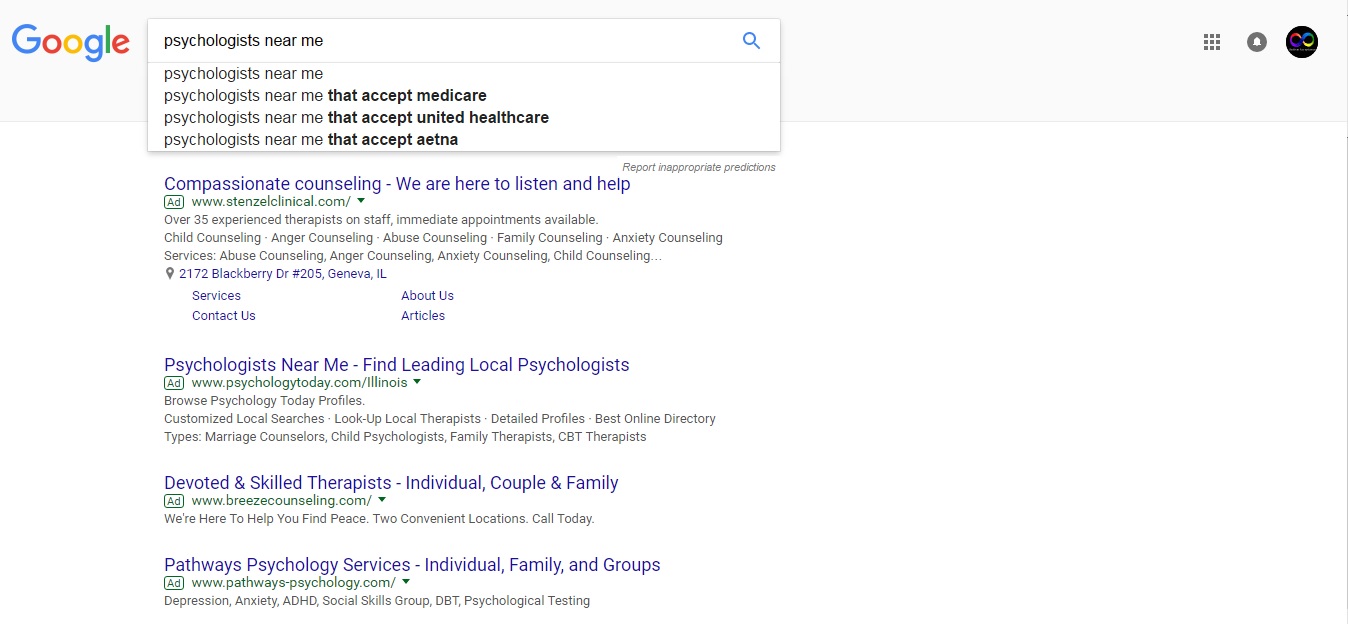
Websites like Psychology Today's "Therapists" page, or other sites with similar lists, may be a good source if you want to look at individual professionals. Keep an eye out for someone with a PhD or PsyD if possible; they are definitely licensed to diagnose, though others types of professionals (like an LCSW) also can.

You can also find professionals on websites for counseling and therapy offices, usually under a tab like "About Us" or "Meet the Therapists."


There may be cases where a psychologist is more accessible than a neurologist, or vise-versa, etc.—again, it really depends on the situation and what options are available to you. Use your best discernment in finding the right professional for your diagnosis.
How Much Does an ASD Diagnosis Cost?
It really depends. Your location is a major factor as well as your insurance. Some clients with insurance pay as little as $10-$80 for a basic diagnosis. Others without insurance or in specific locations might pay as much as $1000-$3000, especially if you get more extensive or high-quality testing. This Quora thread shows just how varied the cost can be: https://www.quora.com/How-much-does-it-typically-cost-to-get-a-formal-diagnosis-of-an-autism-spectrum-disorder
To check if a professional accepts your insurance, you can either find out on their website or by giving them a call. You can usually find out what insurance is accepted by a professional or office on pages like "Payment Options," "Insurance," or "About." If you cannot find the information, call or email them to ask.
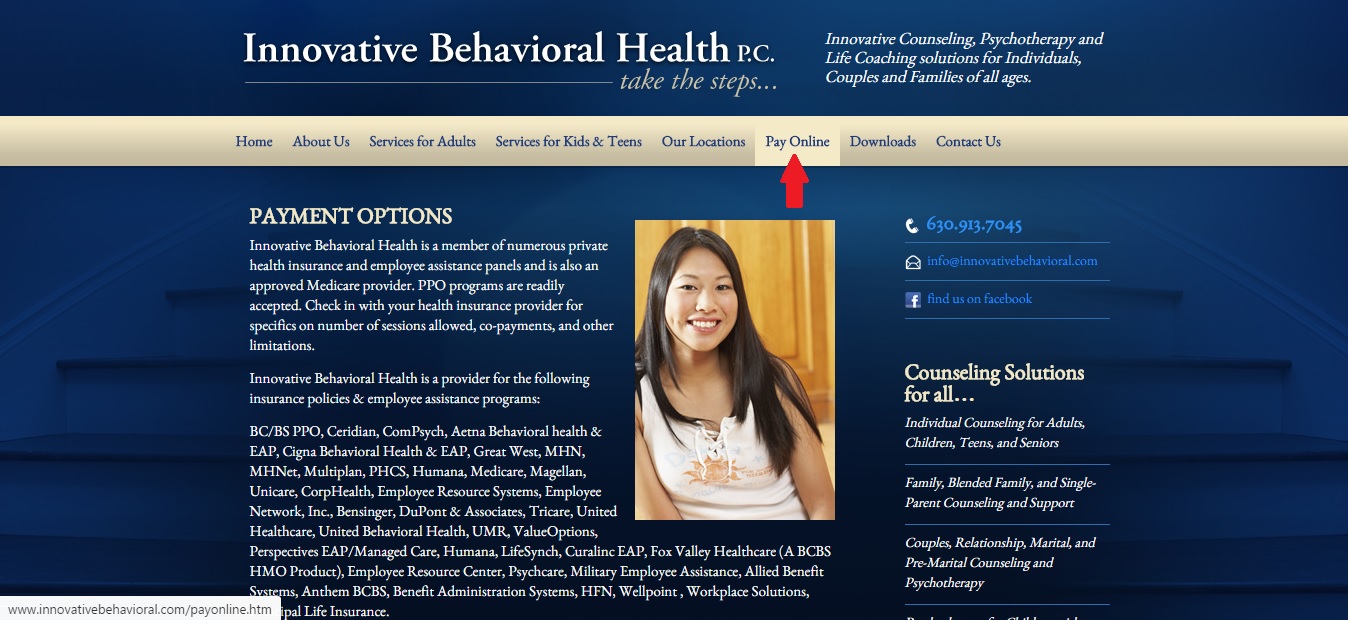
If you have no insurance, some places will use a sliding scale to adjust their out-of-pocket price based on your income. Basically, the less money you have, the lower the price will be. Keep in mind it still may be pricey for you if the out-of-pocket expense is already very high. If there's no information on how to pay without insurance, contact the professional or office to find out.
~~~~~~~~~~~~~~~~~~~~~~~~~~~~~~~~~~~~~~~~~~~~~~~~~~~~~~~~~~~~~~~~~~~~~
I hope this helps! If you still have unanswered questions, please comment below and I will do my best to find the answers!

Tuesday, February 14, 2017
♥ Valentine's Day Questions: Romantic Relationships and ASD
An honest conversation on aspie relationships from your great comments! :)
If either Alyssa or Matt seem nervous, it's because this is an off-the-cuff conversation rather than a scripted/outlined video. This involved a lot of multi-tasking which can make it difficult to be as articulate. Please keep the annotations on for a few extra notes.
DISCLAIMER: We are not experts; we are aspies after all. :) Our responses are from our experience.
---SKIP TO TOPIC---
00:43 - How does an aspie express that he fancies someone without creeping them out?
03:11 - Is it better to tell people you have ASD or wait until later?
04:23 - What is the best way to help a fellow aspie?
05:09 - Should you date an Aspie or an NT?
06:55 - Matt & Alyssa: How we work through our differences
09:30 - Matt & Alyssa: Our shared interests
11:19 - How can you keep a long-distance relationship stable and not feel alone?
14:28 - How do you meet people to date? Should you actively be looking?
17:08 - Let's talk about sex...
20:45 - Addition tips about good communication
Original comments from this video ➤ https://youtu.be/hY67aSSjZ-k
ASD Resources/Facebook Groups ➤ https://goo.gl/ZSGYGJ
---
♪~MUSIC CREDITS~♪
"Daily Beetle" by Kevin MacLeod (incompetech.com)
Licensed under Creative Commons: By Attribution 3.0 License
http://creativecommons.org/licenses/by/3.0/
"Mountain Breeze" by Purple Planet (purple-planet.com)
Licensed under Creative Commons: By Attribution 3.0 License
http://creativecommons.org/licenses/by/3.0/
"Angel Share" by Kevin MacLeod (incompetech.com)
Licensed under Creative Commons: By Attribution 3.0 License
http://creativecommons.org/licenses/by/3.0/
"Friday Morning" by Kevin MacLeod (incompetech.com)
Licensed under Creative Commons: By Attribution 3.0 License
http://creativecommons.org/licenses/by/3.0/
"Dream Culture" by Kevin MacLeod (incompetech.com)
Licensed under Creative Commons: By Attribution 3.0 License
http://creativecommons.org/licenses/by/3.0/
Subscribe ➤ https://www.youtube.com/user/NeuroLushia
Asperger's Documentary ➤ https://youtu.be/2TSlti5bioQ
Facebook ➤ http://www.facebook.com/NeuroLushia
Twitter ➤ https://twitter.com/neurolushia
Saturday, February 11, 2017
♥ C o m m e n t - t o - P a r t i c i p a t e ! Asperger's + Romantic Relationships Video

Leave a comment about aspies & romantic relationships on this YouTube video, and Matt and I will answer your questions in our Valentine's Day video!
COMMENT IDEAS
- Dating advice
- Specific relationship situations
- Questions for me and Matt (about our relationship)
- Any ideas/advice to offer for the conversation
Thanks guys! :) <3
---
♪~MUSIC CREDITS~♪
"Wallpaper" Kevin MacLeod (incompetech.com)
Licensed under Creative Commons: By Attribution 3.0 License
http://creativecommons.org/licenses/by/3.0/
Subscribe ➤ https://www.youtube.com/user/AlyssaHuberFilms
Alyssa Huber Films [Official Website] ➤ http://www.alyssahuberfilms.com
My Asperger's Blog ➤ http://life-of-an-aspie.blogspot.com/
My Asperger's Documentary ➤ https://youtu.be/2TSlti5bioQ
Facebook ➤ http://www.facebook.com/AlyssaHuberFilms
Twitter ➤ https://twitter.com/alyssahubfilms
Subscribe to:
Posts (Atom)

