Sunday, May 7, 2017

Autism Spectrum Disorder (ASD) Diagnosis: A Basic Guide

One question I get a lot is how to seek diagnosis for Autism Spectrum Disorder (ASD) (also Asperger's Syndrome, though that diagnosis was replaced by ASD in the DSM-V). The process is different for everyone and depends on which route you take, but here is a basic guide I put together to help you get started!

~~~~~~~~~~~~~~~~~~~~~~~~~~~~~~~~~~~~~~~~~~~~~~~~~~~~~~~~~~~~~~~~~~~~~

Who Can Diagnose Autism Spectrum Disorder (ASD)?
- Psychologists or Psychiatrists (doctors who know about the human mind)
- Neurologists (doctors who work on the brain, spine, and nerves)
- Developmental Pediatricians (doctors who have special training in child development and children with special needs: also can diagnose teens)

Any psychologist, psychiatrist, neurologist, or developmental pediatrician can diagnose Autism Spectrum Disorder. However, it is recommended that you seek someone who specializes in autism, or at least one who has experience in diagnosing ASD. (For example, Dr. Wahlberg of the Prairie Clinic in Geneva, IL)


Which type of professional you should choose for diagnosis depends on your situation. For instance, in diagnosing a child, seek out professionals with much experience with children (i.e. a developmental pediatrician—though a child neurologist or psychologist may be just as good). Teens may also be diagnosed by pediatricians since they usually treat patients up to age 21.

Adults can be diagnosed by any psychologist, psychiatrist, and neurologist that aren't strictly pediatric professionals. If you are an adult and suspect you may be on the autism spectrum, don't be afraid to seek diagnosis. Despite the misconception that kids can "outgrow" autism, adults with ASD are still autistic—they may just look more "normal" due to coping mechanisms, and the pressure to fit in isn't as strong as it tends to be during school years.


How Do I Find a Nearby Professional?
A simple Google search is an easy way to get started. By typing "psychologists near me" or "neurologists in (your city, state)" it will find results based on your location.
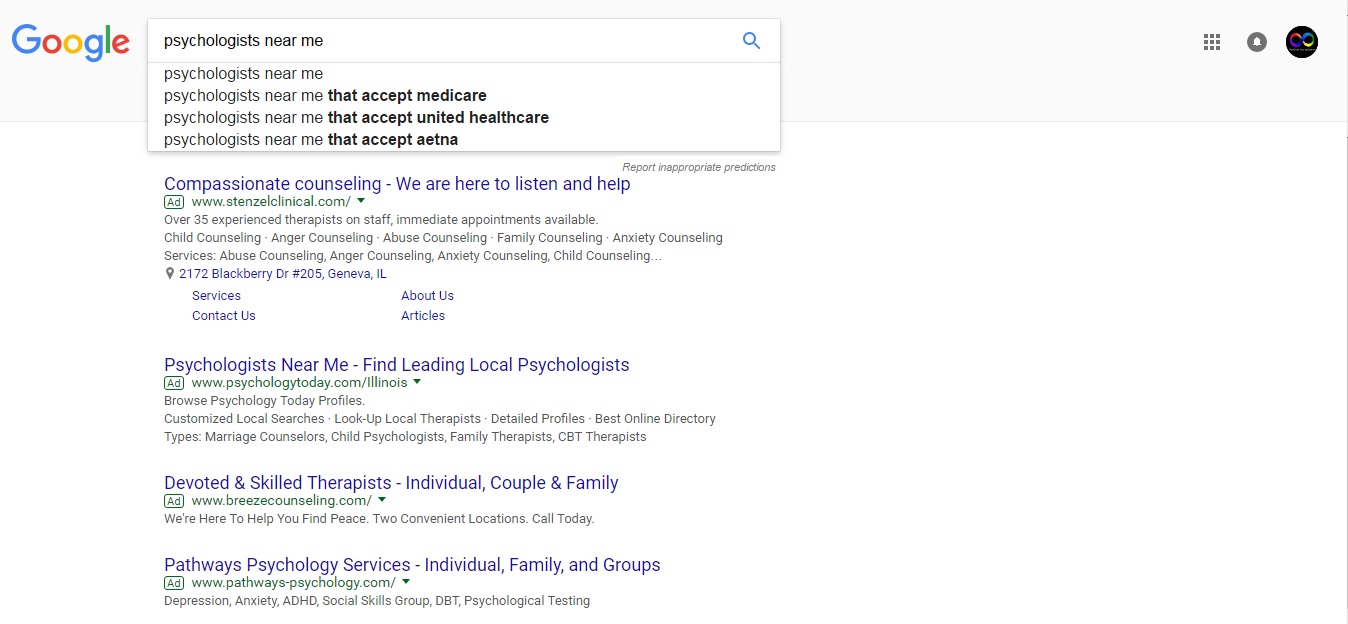


Websites like Psychology Today's "Therapists" page, or other sites with similar lists, may be a good source if you want to look at individual professionals. Keep an eye out for someone with a PhD or PsyD if possible; they are definitely licensed to diagnose, though others types of professionals (like an LCSW) also can.


You can also find professionals on websites for counseling and therapy offices, usually under a tab like "About Us" or "Meet the Therapists."


There may be cases where a psychologist is more accessible than a neurologist, or vise-versa, etc.—again, it really depends on the situation and what options are available to you. Use your best discernment in finding the right professional for your diagnosis.


How Much Does an ASD Diagnosis Cost?
It really depends. Your location is a major factor as well as your insurance. Some clients with insurance pay as little as $10-$80 for a basic diagnosis. Others without insurance or in specific locations might pay as much as $1000-$3000, especially if you get more extensive or high-quality testing. This Quora thread shows just how varied the cost can be: https://www.quora.com/How-much-does-it-typically-cost-to-get-a-formal-diagnosis-of-an-autism-spectrum-disorder

To check if a professional accepts your insurance, you can either find out on their website or by giving them a call. You can usually find out what insurance is accepted by a professional or office on pages like "Payment Options," "Insurance," or "About." If you cannot find the information, call or email them to ask.
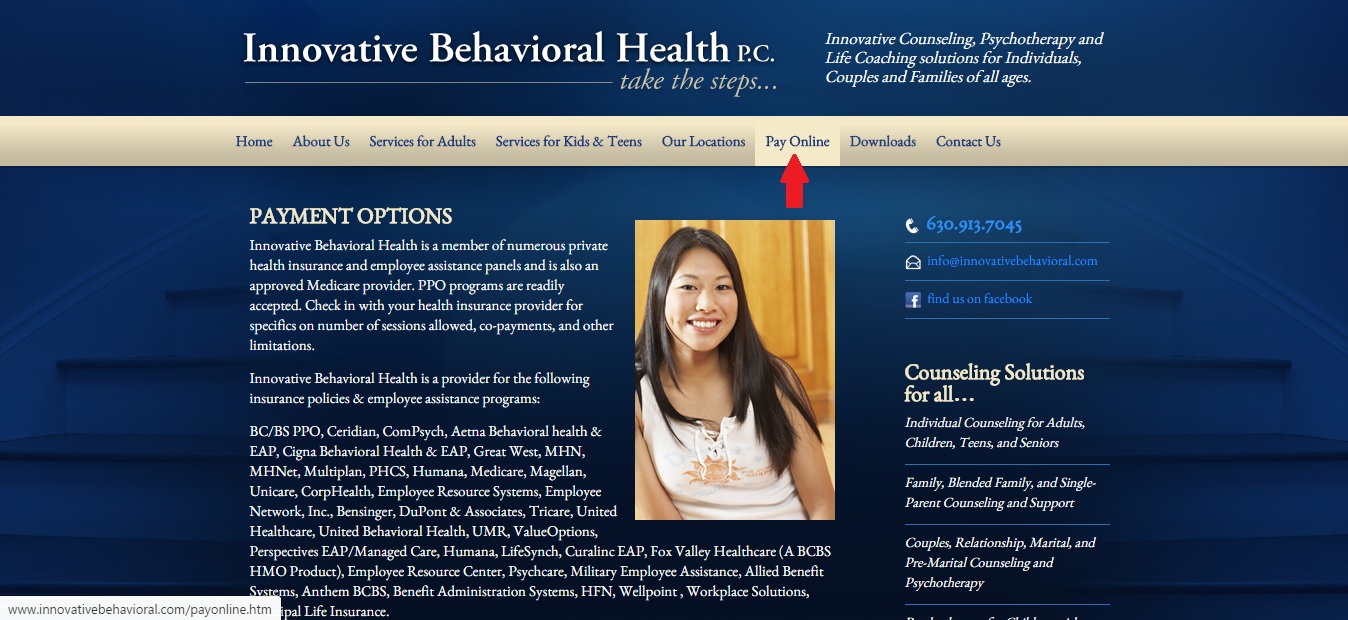


If you have no insurance, some places will use a sliding scale to adjust their out-of-pocket price based on your income. Basically, the less money you have, the lower the price will be. Keep in mind it still may be pricey for you if the out-of-pocket expense is already very high. If there's no information on how to pay without insurance, contact the professional or office to find out.

~~~~~~~~~~~~~~~~~~~~~~~~~~~~~~~~~~~~~~~~~~~~~~~~~~~~~~~~~~~~~~~~~~~~~

I hope this helps! If you still have unanswered questions, please comment below and I will do my best to find the answers!


Tuesday, February 14, 2017

♥ Valentine's Day Questions: Romantic Relationships and ASD


An honest conversation on aspie relationships from your great comments! :)

If either Alyssa or Matt seem nervous, it's because this is an off-the-cuff conversation rather than a scripted/outlined video. This involved a lot of multi-tasking which can make it difficult to be as articulate. Please keep the annotations on for a few extra notes.

DISCLAIMER: We are not experts; we are aspies after all. :) Our responses are from our experience.

---SKIP TO TOPIC---
00:43 - How does an aspie express that he fancies someone without creeping them out?
03:11 - Is it better to tell people you have ASD or wait until later?
04:23 - What is the best way to help a fellow aspie?
05:09 - Should you date an Aspie or an NT?
06:55 - Matt & Alyssa: How we work through our differences
09:30 - Matt & Alyssa: Our shared interests
11:19 - How can you keep a long-distance relationship stable and not feel alone?
14:28 - How do you meet people to date? Should you actively be looking?
17:08 - Let's talk about sex...
20:45 - Addition tips about good communication

Original comments from this video ➤ https://youtu.be/hY67aSSjZ-k

ASD Resources/Facebook Groups ➤ https://goo.gl/ZSGYGJ

---

♪~MUSIC CREDITS~♪
"Daily Beetle" by Kevin MacLeod (incompetech.com)
Licensed under Creative Commons: By Attribution 3.0 License
http://creativecommons.org/licenses/by/3.0/

"Mountain Breeze" by Purple Planet (purple-planet.com)
Licensed under Creative Commons: By Attribution 3.0 License
http://creativecommons.org/licenses/by/3.0/

"Angel Share" by Kevin MacLeod (incompetech.com)
Licensed under Creative Commons: By Attribution 3.0 License
http://creativecommons.org/licenses/by/3.0/

"Friday Morning" by Kevin MacLeod (incompetech.com)
Licensed under Creative Commons: By Attribution 3.0 License
http://creativecommons.org/licenses/by/3.0/

"Dream Culture" by Kevin MacLeod (incompetech.com)
Licensed under Creative Commons: By Attribution 3.0 License
http://creativecommons.org/licenses/by/3.0/


Subscribe ➤ https://www.youtube.com/user/NeuroLushia
Asperger's Documentary ➤ https://youtu.be/2TSlti5bioQ
Facebook ➤ http://www.facebook.com/NeuroLushia
Twitter ➤ https://twitter.com/neurolushia

Saturday, February 11, 2017

♥ C o m m e n t - t o - P a r t i c i p a t e ! Asperger's + Romantic Relationships Video


Leave a comment about aspies & romantic relationships on this YouTube video, and Matt and I will answer your questions in our Valentine's Day video!

COMMENT IDEAS
- Dating advice
- Specific relationship situations
- Questions for me and Matt (about our relationship)
- Any ideas/advice to offer for the conversation

Thanks guys! :) <3

---

♪~MUSIC CREDITS~♪
"Wallpaper" Kevin MacLeod (incompetech.com)
Licensed under Creative Commons: By Attribution 3.0 License
http://creativecommons.org/licenses/by/3.0/

Subscribe ➤ https://www.youtube.com/user/AlyssaHuberFilms
Alyssa Huber Films [Official Website] ➤ http://www.alyssahuberfilms.com
My Asperger's Blog ➤ http://life-of-an-aspie.blogspot.com/
My Asperger's Documentary ➤ https://youtu.be/2TSlti5bioQ
Facebook ➤ http://www.facebook.com/AlyssaHuberFilms
Twitter ➤ https://twitter.com/alyssahubfilms

Saturday, February 4, 2017

ROUTINE CARDS ✂ Task Organizing Method - Invented for Aspies, by an Aspie


Try this task-oriented, aspie-approved method of organizing your routine and getting things done!   I wanted to share this system I came up with because it works for me, so I made this video.

---

Time-oriented schedules or "to-do" lists not working for you? Try this task-oriented, aspie-approved method of organizing your routine and getting things done--it works for me!

I made it specifically for those with Asperger's Syndrome/ASD, ADHD, or executive functioning issues, but anyone can use it. It's super cheap and easy to do!

00:30 - STEP 1: Write down what you need
00:52 - STEP 2: Choose paper, shape, color, size, and decorations
01:27 - STEP 3: Cut out and customize your cards
02:11 - OPTIONAL STEP: Carry your cards in a nametag holder
02:40 - ORGANIZING YOUR CARDS
04:01 - SPECIAL CARDS for specific purposes
04:59 - ADDITIONAL TIPS

---

Filmed with Canon EOS Rebel T2i + EF 50mm f/1.4 USM Standard Lens

♪~MUSIC CREDITS~♪
"On My Way" Kevin MacLeod (incompetech.com)
Licensed under Creative Commons: By Attribution 3.0 License
http://creativecommons.org/licenses/by/3.0/

Subscribe ➤ https://www.youtube.com/user/AlyssaHuberFilms
Alyssa Huber Films [Official Website] ➤ http://www.alyssahuberfilms.com
My Asperger's Blog ➤ http://life-of-an-aspie.blogspot.com/
My Asperger's Documentary ➤ https://youtu.be/2TSlti5bioQ
Facebook ➤ http://www.facebook.com/AlyssaHuberFilms

Twitter ➤ https://twitter.com/alyssahubfilms

Friday, December 2, 2016

There Is Hope for Us

There is hope for our species, the Neurodivergent.

The world has imposed upon us a standard which many of us cannot meet, leaving us scarred in the process of trying to get there.

Stigma, a badge of shame attached to diagnosis, hurts us. Mental illness is not a character flaw, it’s what happens when society’s demands are incompatible with our natural abilities. It’s the pain we feel at being forced in line when we need the freedom to be ourselves. It makes us hate who we are when we can’t control it.

But there is hope for us… our voices are getting LOUDER. Tools like the Internet are giving us a platform to speak and connect with others like us. There is such overwhelming support, we just have to look for it.

We have to be willing to look at ourselves and others with fresh eyes, not through the dirty goggles the world has pulled over our faces. To be accepted, we must accept ourselves and others, and avoid judging each other and buying into damaging stereotypes the way others have done to us.

Keep in mind that many of us Neurodivergents have experienced unspeakable pain, and it is absolutely valid even if Neurotypicals assume we are overreacting.
Overreacting is a myth.
We react based on the intensity of our experience: so we are reacting just right. We should not laugh at each others’ complaints or struggles, whether it comes from a Neurotypical or Neurodivergent. Everyone should be respected.


Anyway… let me tell you what sparked this.

I have been mentally “away” on and off, swinging between self-hatred and love for our kind. 
In my everyday life, I struggle a lot due to the weaknesses that come with ASD and OCDThey just don’t seem compatible with some necessary aspects of adulthood, and I find myself overwhelmed by too many tasks and demands. So I swing back and forth between happiness and misery (thanks especially to ASD extreme moods) depending my tasks for that day, or whether my days off are for “recovery,” or if I actually have enough energy to enjoy myself.

When I’m in school, these problems are x10 (times ten) since the college life leads to persistent information overload for me. The exhaustion so physically and emotionally painful that simply describing my issues as articulately as the last paragraph is near impossible in that state. It ends out coming out in a rant of details rather than a summary--my more natural form of talking.

With every screaming demand and anxiety trigger, my mind stacks another intrusive thought or painful memory over my normally happy self, darkening my vision, and silencing my voice. I hide away because I can’t be socially graceful with all that junk. And after every college semester, I’m left with a hardened shell I must chip away at until I can see myself again. Last time, it took me nearly a year to break free from it.

I’ve been sick, depressed, anxious, and trapped inside my shell for a long time this semester. I scream from the inside, but it comes out in barely a squeak. Sometimes I see a crack in the shell, and find some comfort or inspiration in a ribbon of light before it closes up again. So, I do still have good days, but I have to cling to them for dear life.

It was another ribbon of light that sparked this post. My misery was my only company, so it felt better to shout words of hope to others also stuck in a shell. I know what it’s like to feel trapped, exhausted, and misunderstood.
  
So keep chipping away. There is light outside waiting.


Tuesday, November 15, 2016

Autism Is No Excuse, but It Kind of Is.

If you are friends with me in person, on Facebook, or have interacted with me online, you might be wondering a few things.

For one, why am I talktative sometimes, and then suddenly seem to be ignoring you for ridiculously long periods of time? Or in some cases, drop off the face of the earth by disabling my Facebook?

And why do I decline video/voice calls and requests to hang out? Or say I will, but then change plans or never get back to you?

Why do I fail to follow through if I dare to make promises?

Here's the thing: I am not being a jerk.

I do not dislike you. You are not annoying.

I don't do these things because I want to purposely hurt people.

Yes, I do realize the consequences of my actions, and that whatever I do will inevitable affect people. I will take responsibility for that.

Just remember though: I am Autistic.

This isn't an excuse for everything. If I wrong you, I will apologize. I will try to make it right, and if I do not meet your expectations, I will distance myself so I won't cause you trouble.

I do not expect everyone to accept me; not everyone can handle me. That's okay.


But I do want to explain myself, in relation to being autistic. Because autism is a big, big factor in most aspects of my life:

  • I suffer from constant information overload.
    • Scrolling through Facebook on a bad day is paralyzing
    • Overhearing conversations can be aggravating
    • My unread emails give me a headache
    • Advertisements make me angry
  • I am overwhelmed at least 50% of the time (or more).
    • I've had to call in sick, skip school, and miss fun activities because I would peel off my face otherwise.
  • I have multiple, complex psychological problems that interfere with daily functioning and relationships.
    • Simply getting ready for bed or for class is psychological hell
    • Starting an unfamiliar task or homework assignment can make me cry
    • Worrying about unanswered questions wastes many of my hours


These things torment me. They distract me from doing what I really want to do, and from supporting the friends and family I love.

I try my best to be a good friend. I don't purposely seek to offend. But I might say I can't hang out, or not reply for ages, or not pick up hints, or say all the wrong things... I cannot ask you to not take it personally, because some of you inevitably will. But I do want you to remember that I don't do it on purpose.

I love you, and I care about you. I just cannot process life efficiently enough to show you.


Sunday, October 30, 2016

I Am Not Lazy.

Rarely am I accused of being lazy, but the few times I had been have really stuck with me, sometimes making me wonder if it's true.


I usually get paranoid about being "lazy" if there's a particular task I am putting off. For instance, today was dedicated solely for reading three journal articles for my homework, and I ended up only spending an hour reading a portion of one. If I look at my whole day through the eyes of my initial expectations, I will say "Yes, I was lazy!" But when I look at everything I did that day, aside from the homework, my answer would be NO.

I fried eggs for breakfast, chopped up a salad for lunch, took my supplements/meds, washed the dishes, showered, groomed myself, and exercised on my bike. Between each of those was a large pocket of time for gently coaxing myself into switching tasks in the least painful way.

While it might look like procrastinating or getting caught up in "everyday tasks," I am actually working towards my assigned tasks by FIRST getting my needs out of the way. My general well-being demands a lot of my time and energy, but I MUST be okay first, because I literally cannot do what is expected of me unless I am balanced. So, homework ain't happening if I'm anxious or hungry or under-exercised.

Also...

LAZY DOES NOT EXIST.

Uninspiration exists, and inaction exists. But I think it has more to do with frustration, anxiety, or fear of failure. My creative road blocks come from my perfectionism, not laziness. My procrastination might look lazy, but the real problem is me not wanting to fail. I absolutely detest it when someone accuses another person of being lazy--I even consider it verbal abuse in some cases, and I see no purpose in it because it only reinforces the "lazy" behaviors. Calling someone lazy won't make them say, "Hmm, you are right, I will get up and be productive now." And even if they do, the real problem (whatever it is: burnout, anxiety, depression, etc.) likely isn't being addressed.

I try not to think too hard about the possibility of being lazy. Yes, there are times when I really do need to hurry up and get my butt moving, but my productivity gets worse if I beat myself up about it. Now that I am aware of my OCD, I can be more intentional about not letting my brain run away with the seductive lies. They are not real, and they are not me.

I am not lazy.