Monday, April 25, 2016

Dealing with Disappointment (When You Have Asperger's)

I don't handle disappointment well.

I'm dealing with it right now, even. This blog post is my way of coping, because if I let it get to me, it'll ruin my whole day.

Here's what's bugging me:
  • A friend said she'd come over today, but she can't now because she's not feeling well. She has a lot of health problems so I do understand. I just made the mistake of looking forward to it. I cannot rely on anything, because if I do, I run the risk of being disappointed.
  • I also thought someone made breakfast, but none was to be found... I was hungry. Another disappointment. 
  • My new editing software didn't arrive in the mail yet, even though it was supposed to arrive today at the latest. I can't get back to work until I get that software. Disappointed again.
  • I've missed exercising in my routine several times this week because other tasks took longer than expected. I hope I'm not losing progress.

Now, these may seem fairly minor to most people. And even I think they are minor! In fact, I can't help but view my pouty reactions through the eyes of "normal" people, and see myself as a toddler throwing a tantrum.
But I was expecting pancakes!!
^ I don't want to look like that.
I want to move on like everyone else! But my brain just can't handle it. I try, I really, really try. But I can't.

I'm lucky that I can hide my inward reactions, so hardly anyone can tell when I'm disappointed. I don't want them to know, because they won't understand what led up to it. Most people don't see the tiny stressors building up: routine changes, unexpected events, people not sticking to their word, etc. They only see the end result, which in children on the spectrum (and some adults, even) is either a meltdown resembling a tantrum, or a shutdown resembling non-compliance. I can keep myself from melting down or shutting down because I've learned how to control it over time, but it just makes me depressed later when I'm alone.

I used to have meltdowns when I was little--I'd kick holes in walls and whine excessively. I don't do those things anymore though; instead, I keep it all inside until my anxiety inflates to the point where I can't even take care of myself anymore.


CHANGING AN ATTITUDE IS MORE THAN CHANGING BEHAVIOR

I have accepted the fact that my reactions to these things will always be extreme, but it doesn't stop me from getting annoyed and wanting to change it somehow. Not just any outward reactions that may sneak out (i.e. seemingly irrational complaints or anger), but also my inward struggle with change. That's why I'm here, writing this post. It is helping distract me, at least.

An important thing to know about Asperger's: You can cover up a behavior as much as you want, but that alone won't fix the mental stress that causes it.
Problems need to be tackled from the inside out. See this video for a better explanation: "How Asperger's Works" from Asperger's Experts
I think it's better to take that sort of approach, rather than methods that strictly focus on behaviors, such as ABA therapy. "What is ABA?" from Ask an Autistic

Thing is, I don't want to just refrain from lashing out or whining or voicing my discontent. For sure, I don't want to annoy people or hurt their feelings! But I feel it is more important for me to look inward, to figure out what I can do to lessen the impact of unexpected changes and redirect my focus in a healthy way. For years I have only stuffed it down or ignored it, as I felt that maintaining an appearance of outward normality was more important than my inward well-being.

...wow. I came to this conclusion just now. My original draft of this post just screamed "I WANT TO BE NORMAL!!" and I didn't even realize it. This could be a reason for my feelings of anxiety, desperation, and alienation in my life. This could be why I feel like every time I voice a need, I am just whining or seeking attention. This is why I haven't prioritized my own thoughts and opinions in the past and seen them as equal to others.

I feel more human now.


TACKLING THE PROBLEM: UNEXPECTED CHANGES

A disappointment can ruin my day unless I own up to it. It's like a monster I have to fight.

Kinda like this guy.
I didn't want to it to win, so I replaced my original expectations with new ones I know can be achieved.

I decided I would go to the library today to write this. For sure I will make this blog post! This is something I can control. My mom also made breakfast for me because I asked and explained I couldn't handle it today (usually I make my own breakfast--I'm a big girl. I'm lucky to have a mom who understands my issues though). I also decided to watch a movie with Matt (my fiancé) when I got back because we are both available to.

My backup plan was to play video games if plans didn't work out. Backup plans are helpful, too.

I just have to keep in mind that anything new I put into my schedule takes some time to warm up to.
My brain likes to resist change... perhaps it thinks it's a disease? :P


CONCLUDING THOUGHTS
I wonder sometimes whether other people's reactions to the concerns of ASD individuals, like distress over disappointments, would make a difference for particular aspies. I know it has helped me, as my family is understanding about my anxieties, but I sometimes still feel bad about my reactions, because they can be perceived as me being wimpy or immature. I'm constantly fighting my longing to look normal with my desire to be myself.

But like I said earlier, I'm still slowly climbing out of that rut.
My needs are more important than how other people perceive me or react to me.

In conclusion, here are some things that help me deal with disappointment and unexpected change:
- Replacement plans
- Backup plans for the replacement plans
- Time to process the change
- Willingness to face the anxiety or carry on in spite of it

How do you deal with change? Have you ever felt guilty for struggling with it (or for any of your differences?) How do you balance your own needs with external pressures? Comment below with your thoughts, I always appreciate your feedback!

Saturday, April 2, 2016

Happy World Autism Acceptance Day!

Happy World Autism Acceptance Day! I made a post on my personal Facebook explaining what it's like for me to be autistic. The specific traits I describe are a huge part of who I am as a unique individual... but there's not just deficits! Read my whole rant below for more:

Since some of my aspie friends (i.e. Sue Abramowski) are sharing what it's like being autistic from their perception, I...
Posted by Alyssa Marie Huber on Saturday, April 2, 2016


To support people like me, please see this other post below!

Happy World Autism Acceptance Day! Share this photo to support acceptance of my people! :)Other ways you can help:-...
Posted by Alyssa Marie Huber on Saturday, April 2, 2016


Additionally, you can attend this free event for Autism Awareness Month! Invite your friends, too! Just RSVP ahead of time to join us.

Saturday, March 19, 2016

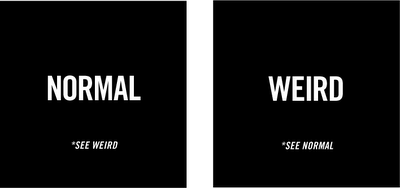
THE MASK OF NORMALITY - When "Normal" is a Good Thing

There is a common idea of what's considered "ideal" or "normal," in a society, and people living in that society are expected to fit that mold. But why?


Normal has its purpose. It keeps the peace and creates a common level of understanding. If everyone on earth completely dropped their "Masks of Normality," the world would probably be in chaos.

Now, I'm all for expressing oneself without fear of rejection or condemnation. But there is a time and place for every behavior. If you acted freely in every situation around every type of person, you could create a lot of enemies and hurt your reputation.


"Weird" Gone Wrong: Don't Be Bob

I had befriended a fellow aspie many years ago. We'll call him "Bob" for the sake of privacy.

Bob had no shame and no mask. #nofilter

He loved musical theater. So much so that he would sing and dance in public.

Kinda like this.
...inviting a lot of weird looks.

Kinda like this.
He wasn't embarrassed by his behavior because he didn't understand how other people perceived it. That didn't make it any less awkward for others around him.

Bob would always speak his mind. It was helpful in understanding his intentions, but he could be brutal when you got on his bad side. He was very cruel to me when I told him I didn't want to be his friend anymore, even though I explained my rational reasons.


Bob could have avoided losing a friend if he had masked his aggressive attitude, or better yet, sought to change it. Additionally, if he had listened to my explanation, he may have learned how to adjust his behavior in the future to avoid losing more friends. That would have been an appropriate time for him to set aside his need for self-expression to address the necessity of adapting to others.


"Normal" is Necessary!


It is necessary to have a level of normalcy. Without it, we would be rejected and avoided, like Bob. Some may confront or criticize us for being too different.


So when is normal a good thing?

Here's an example: workplaces. You have to put your best foot forward in order to get a job and to keep it. You must be formal and socially competent in an interview or you might not get the job. And while you might be more casual and relaxed around your coworkers, you probably have to be careful what you say when your boss is around.


This applies to social relationships as well. Whether it's friendship or romance, relationships require compromise. If you act the same around everyone, someone is bound to be offended, avoid you, or think you're weird. I'm all about keeping the peace; and this is why I believe that acting "normal" according to each situation is perfectly reasonable.


Finding a Balance

Life is all about balance. So how do you balance being "normal" and being yourself? As someone with Asperger's Syndrome, the struggle is real... like, really real.

We tend to go to one extreme or the other--either we oppress our true selves and give up what we want to meet expectations, or we express ourselves too much and drive people away. Some of us may swing from one to the other.

The key is not acting the same around everyone. I have certain people I talk to about certain things, and I act differently depending on who I'm with and where I am. How I act also depends on the current situation.


Safe Zones

The two things I need in order to express (facets of) myself appropriately:
1. Safe People
2. Safe Places

For instance, I probably won't make dirty jokes around my more modest friends because they may not welcome that side of me.


Rather, I'd only make them with people I am comfortable with who enjoy those types of jokes, probably in an environment where it wouldn't be a problem (i.e. I wouldn't make them in a preschool or a nursing home). Safe people, safe places.


Or, if I know someone is an atheist, I probably won't discuss religion with them. And if I had a religious disagreement with someone else, I wouldn't bring it up again in order to keep the peace.


Instead, I'll discuss religion with fellow Christians, or at church, or in my "Christian with Asperger's" Facebook group because it's meant for that. Safe people, safe places.


A good example of a "safe zone" for me is my gaming channel. It's one of my outlets for silly humor (which I cannot survive without).

       YouTube Letsplays                     Twitch Streams


Outlets for my "Aspie" Tendencies


Of course, I do have Asperger’s traits or “aspie” tendencies, so I need an outlet for those, too. For instance, verbal stimming. This involves meowing, making silly faces, and other silly noises like screeches or even fake "farts."


But I only do those things around people I am comfortable with who accept that behavior. I would seem very immature if I did that around everyone!


I used to meow a lot as a kid because I was obsessed with cats. But I stopped suddenly for years. In retrospect, I think I just didn't have an outlet where I felt like I could be myself. I also wanted to be viewed as mature. Those meow-less years were some of the saddest of my life, honestly.


I started meowing again when I met a new friend who I felt comfortable being myself around. I can verbally stim again as I used to, which is very freeing for me. Nowadays I mostly meow around my family, my fiancé, and several other close people in my life.


As reasonable as it is in some situations, acting in a way unnatural to you can be exhausting. What seems to help is having different "safe zones" where it's okay to take off the mask and be yourself. While you still can't be entirely unfiltered, I think it's great to have people who accept most facets of your personality. These people are likely to be our family, best friends, or romantic partners.

It's nice to have a break from acting "normal" every once in a while. In any case, it's part of the balancing act of "normal" vs. "natural." As long as you have a place to be your natural self, acting normal isn't so bad.


Thursday, February 25, 2016

THE MASK OF NORMALITY - Hiding My True Self (An Asperger's Conundrum)


[IMPORTANT NOTE
This video contains examples of extreme autism behaviors like self-injury and sensory overload, as well as visuals to help the viewer understand the not-so-great aspects of autism.]

An Asperger's conundrum: being accepted only if I act "normal." I am not neurotypical, even if I can look like it. It's draining trying to be something I'm not.

Sadly, a lot of the more harmless Asperger's traits are shunned due to being misunderstood, while the more harmful ones may be covered up without addressing the root problem.


(Video Transcript below)

A NOTE ABOUT MY VIDEOS
Due to my Asperger's, I can't always express precisely what I'm trying to convey, so some points may be worded oddly or seem to mean something else. My mouth doesn't cooperate with my brain sometimes. Just know that these videos are meant to educate, not offend or confuse!

Also, my use of the words "us," "we," etc. is me referring to those on the autism spectrum (or human beings in general in some contexts). It's not referring to just me specifically, yet it's also not referring to every individual on the spectrum since we differ. So what I discuss may not be applicable to everyone! It is conclusions I came to based on a mix of my experience, what I've heard from experts, and what I've seen in other autistics. I do not know everyone's story or perspectives--I am only human.

So please approach this with an open mind and don't take anything personally.

COMMENTING
About commenting... I love hearing from you. So all comments, opinions, personal stories, and constructive critism are welcome and appreciated. Debate are okay, but keep them civil. HOWEVER, senseless nitpicking or outright harrassment will not be tolerated, and any abusive comments will be removed.

Thank you.

--

VIDEO TRANSCRIPT

I've gotten a lot of comments both on the internet and in real life that I seem very normal. Some people don't think I have Asperger's because I look so normal. I've been described as "well-adjusted," "articulate," "capable," but what most people don't know is how much I struggle with behind-the-scenes. I have a lot of anxiety, depression, perfectionism, and being generally overwhelmed from trying to look normal 24/7, ignoring any distress I might be from my Asperger's symptoms.

So the question is, why do some aspies look normal and others don't?

I think we're all taught how to be normal from a very young age. And this applies to I think everybody, not just people on the autism spectrum. It depends on your upbringing, depends on the culture, but generally, we're expected to act like everyone else, right?

And I think the more practice that we've had, the closer to "normal" we might seem.

So overall, people on the spectrum have to wear what I call a "Mask of Normality" to hide their autistic traits. And it's not always neccessarily the bad traits; there are some natural traits that come about that some people might--for some strange reason--not want to see. Like stimming, for instance. Like, if there's a little kid who's overwhelmed, and they're at the grocery store, and the lights and noise are too much to handle, and they start spinning in circles and flapping their hands and stuff--the parent will probably feel embarrassed because that looks kind of odd, right? So they'll probably train that out of the kid. But then how do they deal with things?

This is the condundrum that we have. There are certain things we're just expected to hide, but the core problem is not fixed. We still have the core problem. The kid is still going to be overwhelmed, even more so if they can't stim, for instance.

I also wanted to point out the fact that because a lot of aspies deal with being overwhelmed so much more--from sensory overload, information overload, just being overwhelmed in general--that mask tends to slip off a little more often than the average person's "Mask of Normality."

And it makes sense--I mean, try acting normal when your senses are being completely bombarded. Try picturing you're standing right in the middle of a war, like a battlefield, and all this stuff is coming at you. Your first instinct is going to be to RUN or to FIGHT. And it's really easy to freak out. And if someone is looking at you like "Why are you acting so weird?" You're looking at them like "DO YOU NOT SEE WHAT'S GOING ON?!?"

So I'd like to emphasize that when you see somebody with Asperger's who is completely overwhelmed or overloaded, please do not expect them to respong in a normal way, because they probably won't. They're past the point of being able to pretend anymore.

Now, it's understandable why someone would want us to hide things like aggression or behaviors that are going to hurt someone, because nobody wants that, nobody wants to be hurt. And I agree, but sometimes we kinda just put a bandaid over those things, And the kid might still feel aggressive, and they'll carry that on later in life, and the core of the problem's never fixed. So I think rather than putting a mask over these things, we need to figure out a different approach for people on the spectrum.

I got this comment on my documentary which I think describes this so well. It reads:

"I'm partially annoyed by the fact that some of us have learned to mimic social behaviours of others. In MY case, it is a tiny bit of a burden. Because I act "Normal" most of the time, I can't have an Aspie moment. My mum get's annoyed about how aggressive i've been getting recently, the reason behind it is I'm putting WAY too much energy into being things that I'm not."

This is the conundrum.

It's not that we're terrible people. It's not that we want to hurt other people or offend them in any way. We're just trying way too hard to act normal. That's what I think what causes a lot of the depression, and a lot of the anxiety, and a lot of the behavioral problems. We're trying to fit into this box, and we don't want to fit into this box, but everyone wants us to!

Now, my friend Katie, she brought up this really interesting outlook on this: The world is kind of like a stage, and we are all actors on that stage. And people with Asperger's, they're put into these roles that we are not necessarily meant to be in. And so it becomes very uncomfortable after a while, trying to act like that character when it's really not you, and it's tiring, it's draining.

And yet, people look at me and they assume I don't have Asperger's, because I am so good at playing this role. It's draining, but I'm really good at playing it. Now, in my case, my normal traits, those are the only ones I tend to show in public. So that includes even being with my friends--even if they know I have Asperger's. To them, I look normal 80% of the time, because when I'm around them, I'm normal. 
But that's not the real me 80% of the time. The real me 80% of the time is quiet and focused, I don't have as much capacity to listen sometimes--I actually made a list here of some of the traits that I have:

ALYSSA REALLY IS... (Asperger's Deficits)
- Obsessive / Perfectionist
- Can't hear you when extremely focuses
- Rants a lot
- Thinks "in a circle" or broadly before getting to the point
- Messes up verbally sometimes
- Misinterprets others and is misinterpreted
- Misreads emotions

This is why I prefer spending a great deal of time alone (among other reasons), cuz I don't want people to see all these things about me that they might not like. And I need a lot of rest from trying to act normal.

Also, the only reason (among other reasons) why I can look normal is because I make a realistic plan for social ocassions, and I prepare myself ahead of time. Even for this video, I prepared myself ahead of time. I've kind of got a rough transcript I'm reading from, but I had to rant this out over and over and over before I could actually be articulate for the video.

Since my deficits are highlighted often... I sometimes forget to mention my strengths (I don't like bragging publicly). However, I will list the positives, too. Because they are important.

I...
- Am a "thorough" learner. I can quickly become an expert at almost anything I am interested in.
- Like everyone regardless of their differences.
- Can focus intensely for long periods of time (i.e. It took me two days straight aside from eating and sleeping to make this video.)
- Can analyze objectively without emotions geting in the way (mostly)
- Have a very strong visual mind, vivid dreams, imagination, etc. and an overall rich perception of life (sort of like being high...)
- Have deep self-awareness and insight
- Work thoroughly and skillfully, when given proper time frame

These are things I don't want to hide. But our society seems to value social competence and verbal skills more than these. I value them, though. They are who I am.

My advice from what I have learned recently: Don't hide who you are.
Even if no one seems to care about the real you. 
Even if they don't approve of the real you.
Even if the real you doesn't meet their expectations.

No need to pretend. 
No need to apologize.
We're not here to impress everyone.

True happiness (and self-acceptance) can be found when we take off the mask.


Even if it's just for a little while.

--

➤ My Asperger's Documentary

➤ My Asperger's Blog


➤ Facebook

Saturday, February 13, 2016

Aspies in Love - Alyssa and Matt (A Neurodiverse Valentine's Day)


This video is my public declaration that says "Hey, this love pug is mine and I wanna show him off."... Even though I'm sorta shy about it. xD It's also to show that everyone is lovable. You just need the right kind of person. 

Have an awesome Valentine's Day! Now go enjoy it with yourself, your spouse, your boyfriend/girlfriend, your crush, or your postage stamp collection because that's how you roll.

Peace ✌

CREDITS
Music by: Kevin MacLeod and Purple Planet
Animated characters by Buddypoke app
Various stock clips from Videvo.net

---

TRANSCRIPT

This is me.
And this Matt.
Both of us are on the autism spectrum.
And... both of us are in love.

You might be thinking, people with autism can't be romantic!
*BEEP (incorrect)*
Misconception alert!
Many people with autism and Asperger's Syndrome do fall in love, get married, and start a family. Whether that's family of kids or cats.

But, due to differences in social/emotional development, some of us are late bloomers, or grow up never wanting a relationship at all. I was one of the late bloomers.

When I was younger, I decided that love was icky.
(funny voice) "I'm never getting married!" I said.

When I was younger, I decided that love was icky.
(funny voice) "I'm never getting married!" I said.

Here is how we met. I was kinda stalking through the members of an Asperger's Facebook group looking for new friends when I came across Matt's profile. His profile didn't quite fit the criteria of what I considered "interesting" (and I was picky about who I chose to talk to at the time... I tended to avoid incomplete or strange profiles).

I messaged him anyway. Why? I don't know. In retrospect, I say it's divine providence.

We talked for a while, and me, being an overly suspicious and analytical aspie, found him creepy at first because he was so dang friendly and considerate. I was not used to that. But eventually I adjusted and started to like his character.

Time passed, and we talked almost every day, about pretty much everything. We started Skyping, too.

He was a very interesting person. So I invited him to participate in my documentary, "Through Our Eyes: Living with Asperger's."

He lived in Ohio, and I was in Illinois, so he drove over here so I could interview him. Plus we wanted to meet in person anyway, so I had my friend drive me to where he was staying.

That was my first time in a Jeep, by the way.

Oh, and here's me meeting Matt.

We did lots of stuff.
Filming the documentary...
Going to Chicago...
Walking... walking... more walking....
And being weird.
Matt also took me on a date.

Over time, I realized how valuable our friendship was. It's like he's the same species as me so we understand each other, and we accept each other's weirdness. Well, more than accept it. We love it.

The next time we met up was at a conference for showing my documentary.

We saw each other again in June, only this time I visited him in Ohio.

He took me for a ride on his 4-wheeler. I don't have any footage from it so here's my brother on the 4-wheeler.

And obviously, we had our silly moments.

I wanted to remember that visit, and all the visits in the future. So I filmed the house where we stayed--for me, remembering places helps me remember important memories.

Our most recent visit was after Christmas. I didn't overplan this time because I wanted us to really enjoy our time together. It'd be hard to if we were burned out. I wanted us to enjoy what we both do best... just living every day, cooking food, chilling out, and working together.

Dear Matt,
Thank you for not only accepting me, but for loving me. Thank you for choosing me not out of charity, but for who I am.

Thank you for being so sweet to me...
Sending me funny pictures and videos to cheer me up...
Writing on my screen during all nighters...
And leaving rants in my inbox.

You are incredibly smart...
Talented...
And funny.

I also think it's cute how we have the same shoe size.

Thank you for all the deep conversations about life, aspies, society, and the future. And all those random facts we like obsessing over.

Thank you for going with my flow instead of going against it.
For showing me that I am not defective, and that you value my needs, my hopes, and my dreams. And for letting me into your life to do the same.

Thank you for giving me hope for a real future, with the one man who is perfectly compatible with me in every way. I thank God every day for all his ridiculously obvious hints that you are the one. I wouldn't have noticed otherwise.

There is so much more to our relationship that I wish I could convey, but you know me. I'm shy, people are watching me, and I can't find the right words sometimes. So... that's it.

But one more thing...

Matt,
You are my sunshine, my muffin, and my viking bodyguard.
The question is... will you be my Valentine?

Monday, February 8, 2016

Please Understand... I Don't Want to be a Martyr

"If someone's got a gun to your head and asks if you believe in God, and "yes' means death, what would you say?"


This is a common question church folks may ask. What they don't know is that I feel like I'm faced with this 24/7. Anxiety tends to do that.

This is not related to my faith. I use this example because something is always at stake for me: my energy, my sanity, my sense of freedom, etc. Just so I can look normal.

I take bullets to my core self because I cannot say no.
I feel like a martyr. But please understand. I am not brave.
I don't want to be a martyr.


I have Asperger's Syndrome. I can explain my case to you, but you may never understand it unless you are me.

Asperger's Syndrome is an autism spectrum disorder, where basically the person processes the world differently. They tend to process more details so can be overloaded easily, not only by their sensory environment, but also by social interaction. It is hard for us to understand and relate to neurotypicals (people without Asperger's). They seek comfort through routine and obsessions since the outside world is scary and unfamiliar.

Aspies (people with Asperger's) are constantly in survival mode when they are not comfortable. And this is most of the time, for aspies who have not yet figured themselves out. However, in order to be seen as socially competent and maintain friendships, they often must sacrifice their own comfort (and sanity, in some cases) to mimic everyone else even if they don't want to. Aspies have a very narrow range of things they want to do out of necessity, because the world is so broad and confusing that they need a sanctuary.

I need routine. I cannot live without it. I mean, I have before. But it makes me sick and drained. Without it I can still smile, but inside, I want to die.

Things that are normal for others can kill me.

"Hey Alyssa, wanna go to that concert with me?"
"Sure, maybe."
(No... they hurt so bad.)

"Hey Alyssa, wanna go out to eat around 4pm?"
"Sure, maybe."
(No... my dinnertime is at 5pm.)

"Hey Alyssa, wanna hang out last minute?"
"Sure, maybe."
(No... today is Laundry Day.)

"Hey Alyssa, wanna sleep over and watch cartoons?"
"Sure, maybe."
(No... anywhere away from home is living hell.)

I really want to... or... I wish I could, if it didn't cause me anxiety. But it never ends well when I say yes.

What if I said no?

My wonderful aspie boyfriend tells me I shouldn't feel obligated to do things I really don't feel comfortable with, and I agree with him. I just wish it were that easy...

If I was honest with people, and refused to do things for seemingly stupid reasons, I'm afraid that no one will like me anymore. I know I have a lot of good traits to make up for it... like my acceptance of anyone, my hyperfocusing and productivity, my self-motivation and insight... but I struggle to allow myself to have different needs than other people. It makes me seem like I don't want to spend time with anyone... but I do. I just cannot stray from my routine.


Examples of my routine reminders. I have general ones, but I do everything in a specific way.

But, I will not ask people to adapt to me. I feel too different, too rigid, too structured. You can't talk to me at lunchtime. No, I will not eat the food you're eating. Yes, I have to watch the same TV show at this hour so please don't change the channel. I can't take the garbage out yet, I need to pace around the house first until it feels right. Please don't call my name to ask me for a favor RIGHT NOW. It makes me anxious.

If I cannot do what I am used to, I often hide in the nearest bathroom to brace myself for the next activity. Like a wounded soldier on the battlefield finding shelter. I am taking bullets so that you can enjoy your time with me.

Don't get me wrong. I genuinely like you and want to spend time with you. But sometimes, beneath that smile, I am in horrible pain. I am just really good at hiding it.

If I am not sticking to my routine, any happiness you see is forced. I have left the shelter, and let go of my oxygen tank underwater. I am holding my breath until I can find another pocket of air. I am trying to sing in the midst of war.

Sometimes I don't notice it. I'm so used to the violent pain that I can wade through it when I'm ready. I can take a thousand bullets.

But at the end of the day when I scream because I cannot pretend anymore... just please understand, and remember what I go through. I don't want to be a martyr.


Wednesday, January 20, 2016

Positive Changes

As I look back at my past blog posts, I've noticed quite a change... I used to be more negative and inflexible. Nowadays I find it easier letting go and moving forward.

I mainly had used this blog as a coping mechanism. That's why I seem to have focused so much on my struggles more than the positives in my life in previous posts. But I hope to talk more about happy things on here.

The biggest change I've noticed in myself is what I'd call a "zen" state, where my ideal self is outwardly calm and quiet, and my thoughts come in a steady stream rather than huge messy chunks. I've also become less perfectionist, which is a HUGE improvement for me. Not sure if it was my concussion from a few years ago that did it, or if it was a gradual change. Probably a bit of both.


My brain is as calm as this lake.

In any case, I can manage my emotions and sensitivity better since I've become more adaptable. The release of my documentary has helped me with that, since I've had to learn to carefully think through replies to my many comments, and to have enough backbone to delete and block trolls as they come.


I've also had discussions with people who have a very different outlook than me (including friends and family), so I've had to suppress the temptation to respond emotionally and consider the other person's perspective first. I used to always think my way was always the right way. But not so much anymore. Everyone will have at least one opinion that differs from mine, even my own boyfriend! 

(I usually don't talk about specific people on here but I may as well open up: I have a boyfriend. He's an aspie like me, and he's wonderful. :) ) 

Anyway, we've had discussions on some hot button topics. While I didn't agree with some of his viewpoints, the difference in opinion was not actually a big deal (I. E. I logically wouldn't break up with him over it because they weren't things I cared about much). But my emotions got the better of me a lot, so I'd stress out thinking our relationship wouldn't work out, when in reality, I just needed to respect the fact that there will be differences between us and they're not a big deal. Differences are what make people interesting! I honestly would get bored if I was dating someone exactly like me.

This couple agrees on everything. Look how boring they are.

I've grown not only from interactions like this, but from life conflicts and some extreme struggles... This past semester, I had been dealing with enormous amounts of anxiety and depression. So much so that I decided to take the spring semester off. I worked so hard to do well in school and look normal, that I neglected to address some of my needs. Working at a pace way too fast for me for years has worn me out. But like I said, the extreme struggle has helped me grow. I am better at time management, which is better for my overall mental health. I also seek social interaction more, since I know that even if I don't want it or don't feel ready for it (which is most of the time), I do still need it. I am better able to balance a social life and my work now that I have my own time and space to do it.

I still have big aspirations, but since slowing down I've tried to take on less. I picked the goals I want to work towards, and I'm just focusing on those. For now, I aim to post more on my YouTube channels, finish up my leftover projects, and to be good company for my boyfriend since he's still in school this semester (poor guy D:).

I also hope to post more happy things in the future. :)